
Environmental Stewardship
At EMSTEEL, environmental stewardship is a core value embedded in every aspect of our operations. We emphasize environmental responsibility through rigorous internal and external audits, and all our operational sites are Environmental Management Systems (ISO 14001) certified.
Here’s how these principles align with EMSTEEL's practices:
- Compliance with Environmental Laws and Regulations
- Continuous Improvement in Environmental and Resource Management
- Continues Reduction of GHG Emissions through Innovation & adopting the best available techniques such Carbon capture and utilization and green hydrogen

Air Quality

Waste Management

Water Quality and Conservation

Biodiversity
Air Quality
EMSTEEL adheres to rigorous environmental standards and regulations. These principles align with EMSTEEL's practices and ISO 14001 management system requirement.
EMSTEEL implements robust monitoring programs to ensure compliance with these standards, focusing on key pollutants such as SOx, NOx, CO, and particulates.
Emirates Steel installed continuous ambient air monitoring station in the community area and do periodic monitoring assessments to evaluate compliance with air quality standards. This includes maintaining detailed records and reporting any deviations from the applicable requirements to regulatory authorities.
EMSTEEL is dedicated to continuous improvement in environmental management, aiming for 100% compliance with all regulatory requirements. The company has set ambitious targets to reduce emissions from all point sources by 2030, below the current emission levels and regulatory mandates. This commitment involves adopting advanced emissions reduction technologies and implementing effective strategies to mitigate air quality impacts.
Waste Management
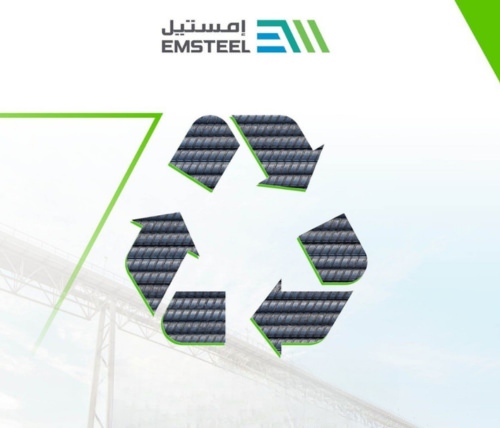
EMSTEEL has established a Metals Recovery and Slag Processing facility to enhance environmental management by processing slag and recovering scrap metal. This facility contributes significantly to recycling efforts, improving operational efficiency and reducing environmental impacts.
EMSTEEL recognizes the infinite recyclability of steel, contributing to a circular economy. The ability to recycle steel without loss of quality ensures that steel remains a sustainable and affordable material.
EMSTEEL also employs a comprehensive waste management system that prioritizes waste minimization and recycling. This system includes effective waste segregation, handling various waste types, and implementing strategies to enhance recycling processes.
Water Quality and Conservation
EMSTEEL employs water-recycling systems that allow water to be reused in operations. This significantly reduces the amount of water required, thereby conserving valuable resources and supporting sustainability goals. Although EMSTEEL facilities are located in regions with varying water scarcity levels, the company remains proactive in updating and implementing best available techniques to preserve water resources and mitigate potential impacts from drought conditions.
EMSTEEL ensures proper water treatment and discharge, fully complying with local and federal environmental regulations. The company is also planning to implement ISO 46001 in the upcoming year and has set an ambitious target to reduce overall water consumption.
Biodiversity and Ecotoxicity
At EMSTEEL, protecting biodiversity and minimizing ecological risks are key elements of our environmental responsibility. While our facilities are located within an industrial zone with limited natural habitats, we remain committed to managing potential impacts on nearby ecosystems through structured planning and preventive measures.
Our Biodiversity Management Procedure, aligned with the CARES Sustainability Scheme and UAE regulatory frameworks, guides our efforts to avoid, minimize, and mitigate environmental impacts—including air emissions, light, noise, water discharge, and habitat disturbance. Mitigation actions are implemented through our Operational Environmental Management Plan (OEMP) and supported by ongoing environmental monitoring, inspections, and audits.
In line with our sustainability goals, we aim to carry out at least one biodiversity-focused initiative each year, such as habitat enhancement, greenbelt development, marine ecosystem awareness, or conservation activities. Biodiversity performance and related efforts are disclosed annually in our Sustainability Report to ensure transparency and stakeholder accountability.
Mitigating Impacts Through Proactive Measures
To prevent and minimize ecological harm, EMSTEEL applies the Avoid–Minimize–Restore–Offset hierarchy. Specific biodiversity and ecotoxicity controls include:
- Directional Lighting: Lighting fixtures are oriented away from sensitive habitats to reduce disturbance to nocturnal and migratory fauna.
- Greenbelt Development: Native vegetation buffers help trap dust, support biodiversity, and serve as visual and acoustic barriers.
- Water Quality Monitoring: Discharges are tested for salinity, temperature, residual chlorine, and metals to protect marine life, as detailed in our EIA.
- Air and Dust Emissions Control: Enclosures, scrubbers, and dust suppression systems are installed across critical units.
- Noise Management: Predictive modelling is used to assess noise impact, with real-time monitoring in place to ensure compliance.
- Waste and Spill Prevention: Secondary containment, regular inspection, and emergency response training ensure that accidental releases do not reach soil or water ecosystems.
Biodiversity Baseline and Impact Assessment
As part of our ongoing Environmental Impact Assessment (EIA) process, EMSTEEL commissioned an accredited third-party consultant to assess biodiversity risks and impacts across the operational lifecycle. The EIA confirmed that our facilities, located in a modified industrial zone, do not intersect with any endangered species habitats. Nevertheless, proximity to the Bul Syayeef Marine Protected Area and other ecologically sensitive zones necessitates continuous monitoring and control measures.The baseline study assessed marine and terrestrial biodiversity using internationally accepted indicators and methods such as GIS habitat mapping, taxonomic diversity surveys, and water and sediment quality testing. Key biodiversity receptors included:
- Intertidal and benthic marine habitats
- Native vegetation remnants and greenbelt corridors
- Migratory species potentially affected by noise or light
Areas such as air emissions, noise, water discharges, and light pollution were identified as potential stressors. Findings from the assessment inform a suite of targeted mitigation actions detailed in our Operational Environmental Management Plan (OEMP).
Noise and Vibration Management
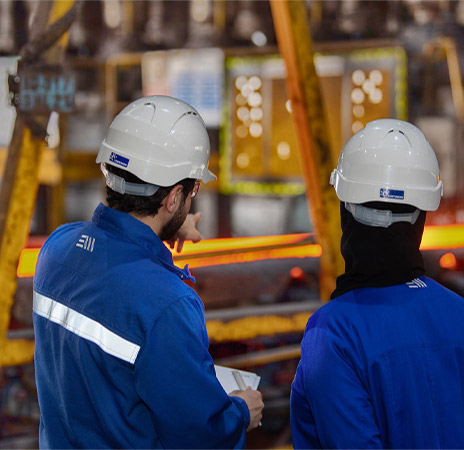
EMSTEEL maintains a comprehensive noise and vibration monitoring programme across its operational facilities. Ambient environmental noise monitoring is conducted at fixed locations within the facilities and at points representative of nearby sensitive receptors, including areas closest to neighbouring communities. Monitoring is undertaken by accredited third-party laboratories during both daytime and night-time periods in accordance with the approved environmental monitoring programme. Occupational noise monitoring is also conducted monthly as part of routine workplace inspections.
Preventive and condition-based maintenance approach is in place to controlling noise and vibration at source. Under its Condition Monitoring Programme, vibration analysis of rotating equipment is routinely performed using AMS Machinery Manager, supported by frequency-domain fault diagnostics. Overall vibration levels and established machine-specific failure modes are assessed to identify abnormal operating conditions at an early stage and prevent equipment deterioration or failure.
In addition to monitoring and maintenance, EMSTEEL continuously reviews operational and maintenance practices to identify opportunities for further noise and vibration reduction. Engineering controls, including noise attenuation and vibration damping solutions, are implemented where technically and economically feasible, consistent with recognised Best Available Techniques (BAT).
Through this integrated approach—combining environmental and occupational monitoring, condition-based maintenance, engineering controls, and continuous improvement—EMSTEEL reinforces its commitment to responsible operations and effective management of noise and vibration impacts on employees, surrounding communities, and the environment.